

International Women’s Day special: Are women allowed to make beautiful art?
An exhibition in Almaty takes us on a journey from Greek Mythology to Central Asian fables and questions feminism’s limits along the way.
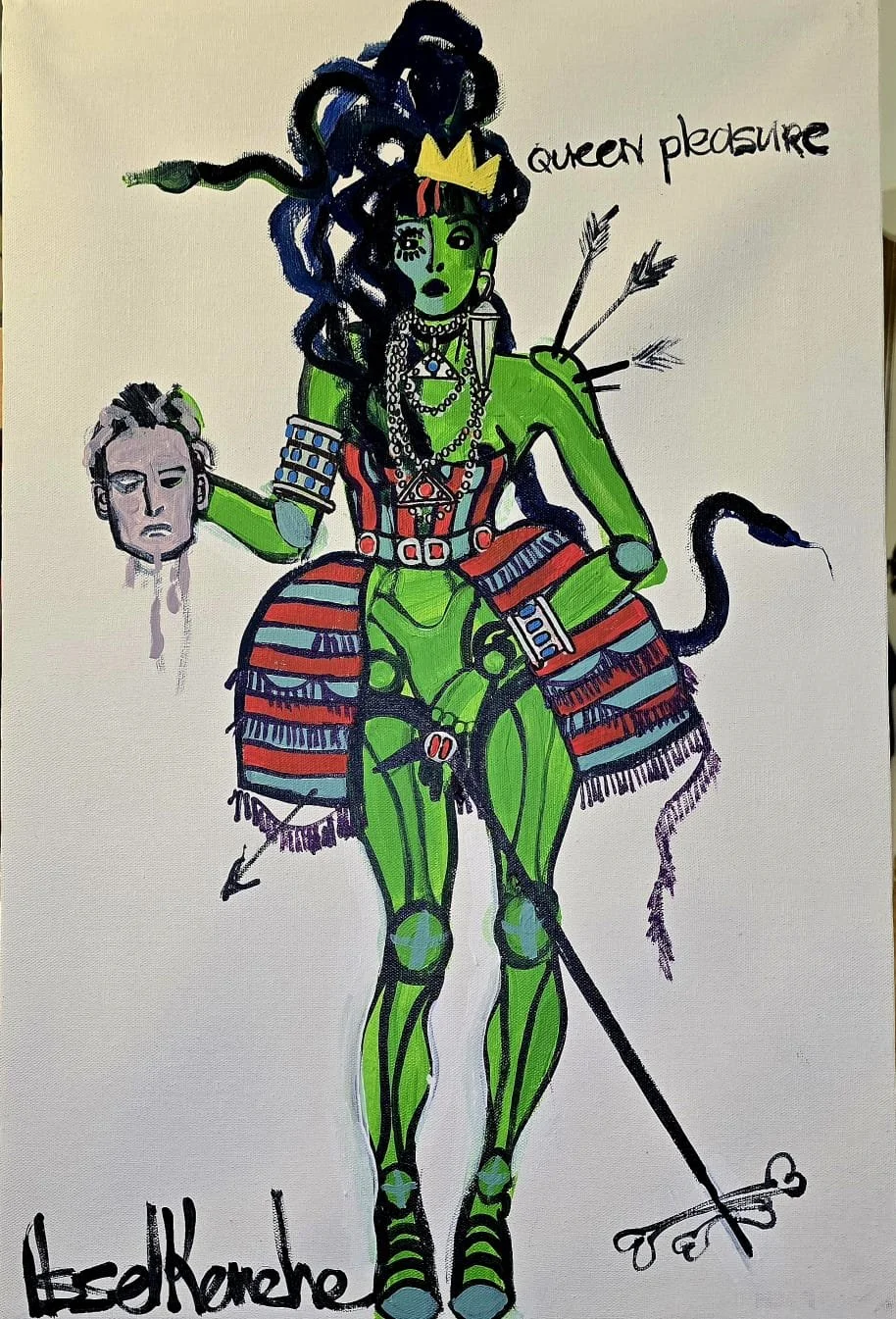
All images in this article are Assel Kenzhetayeva, from the ‘Queen Pleasure’ series. Copyright Assel Kenzhetayeva.
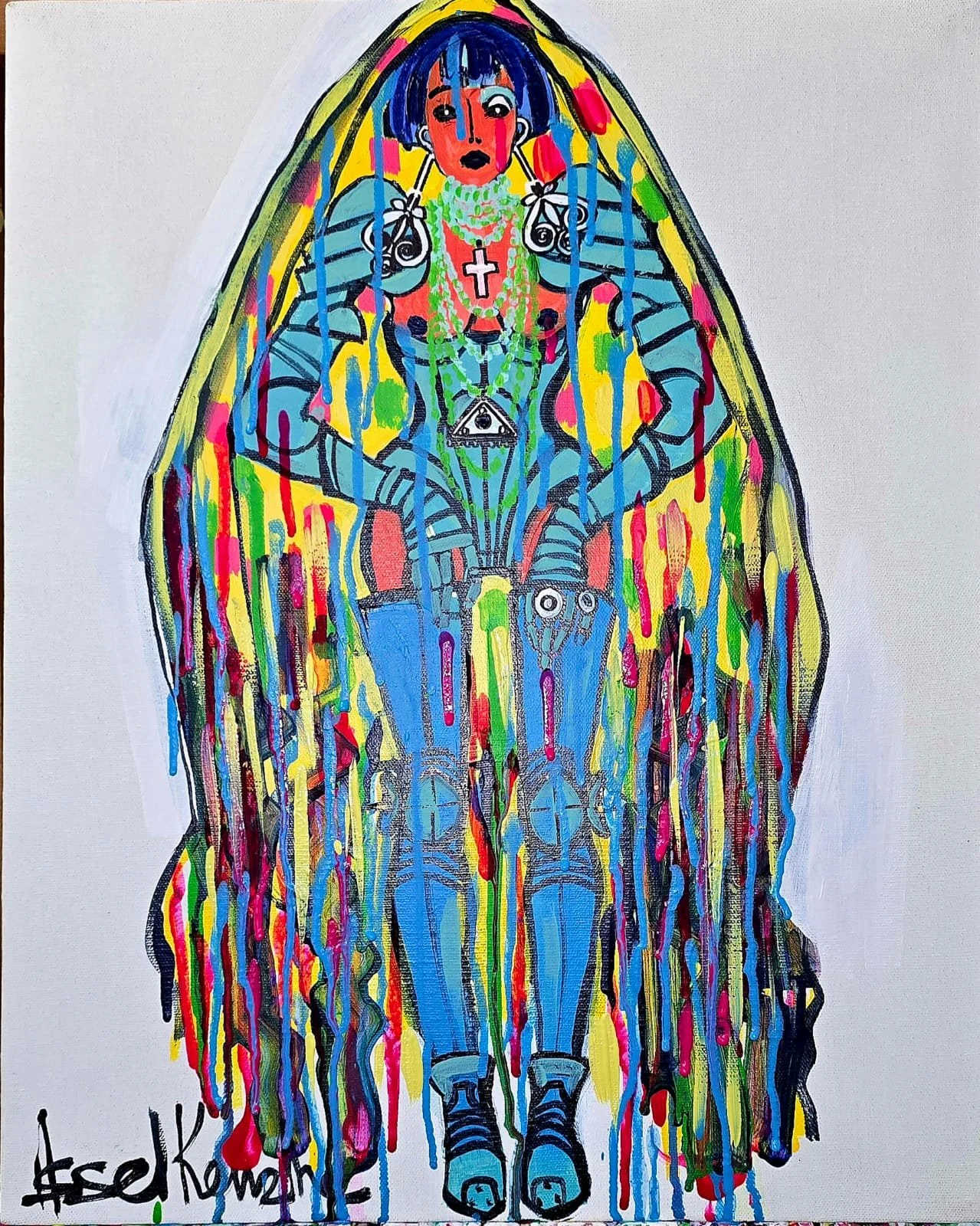
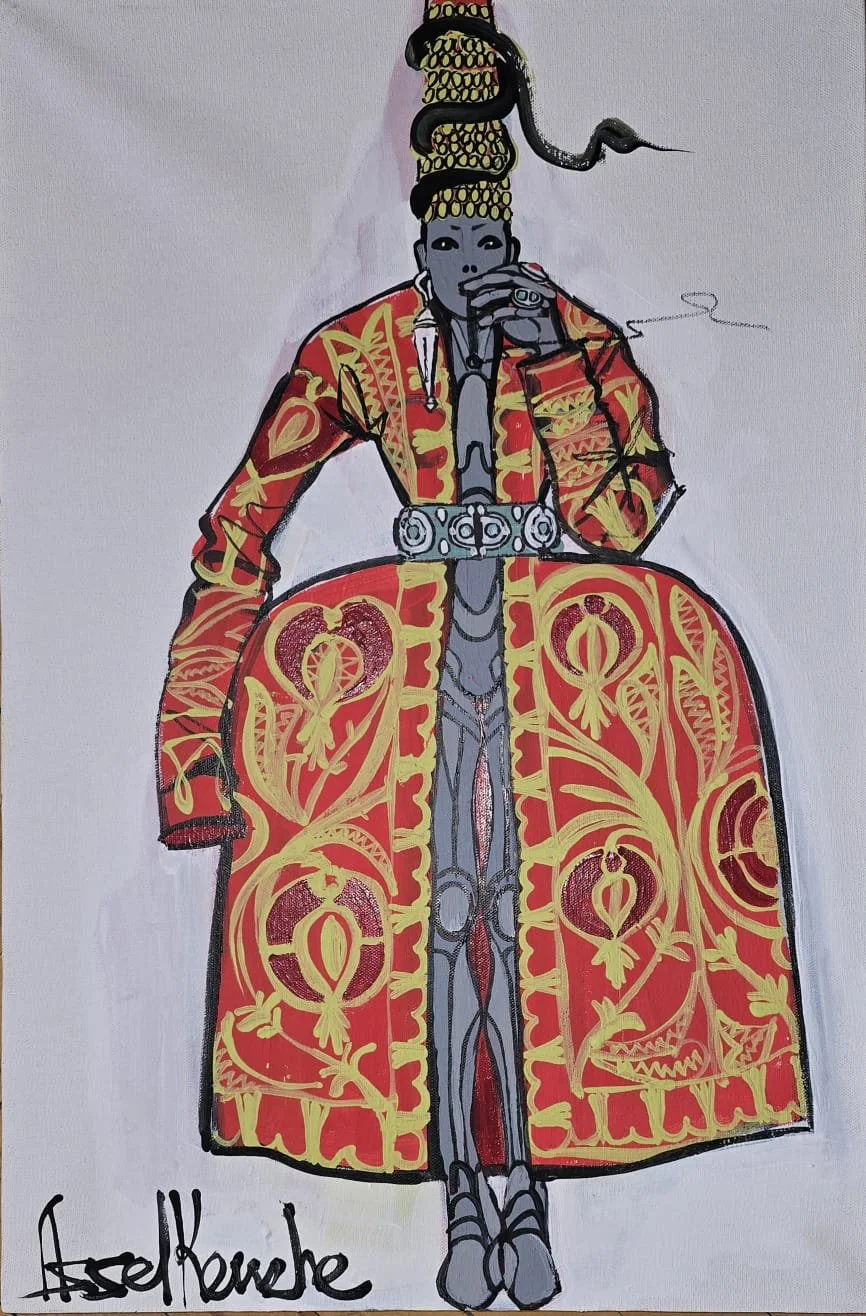
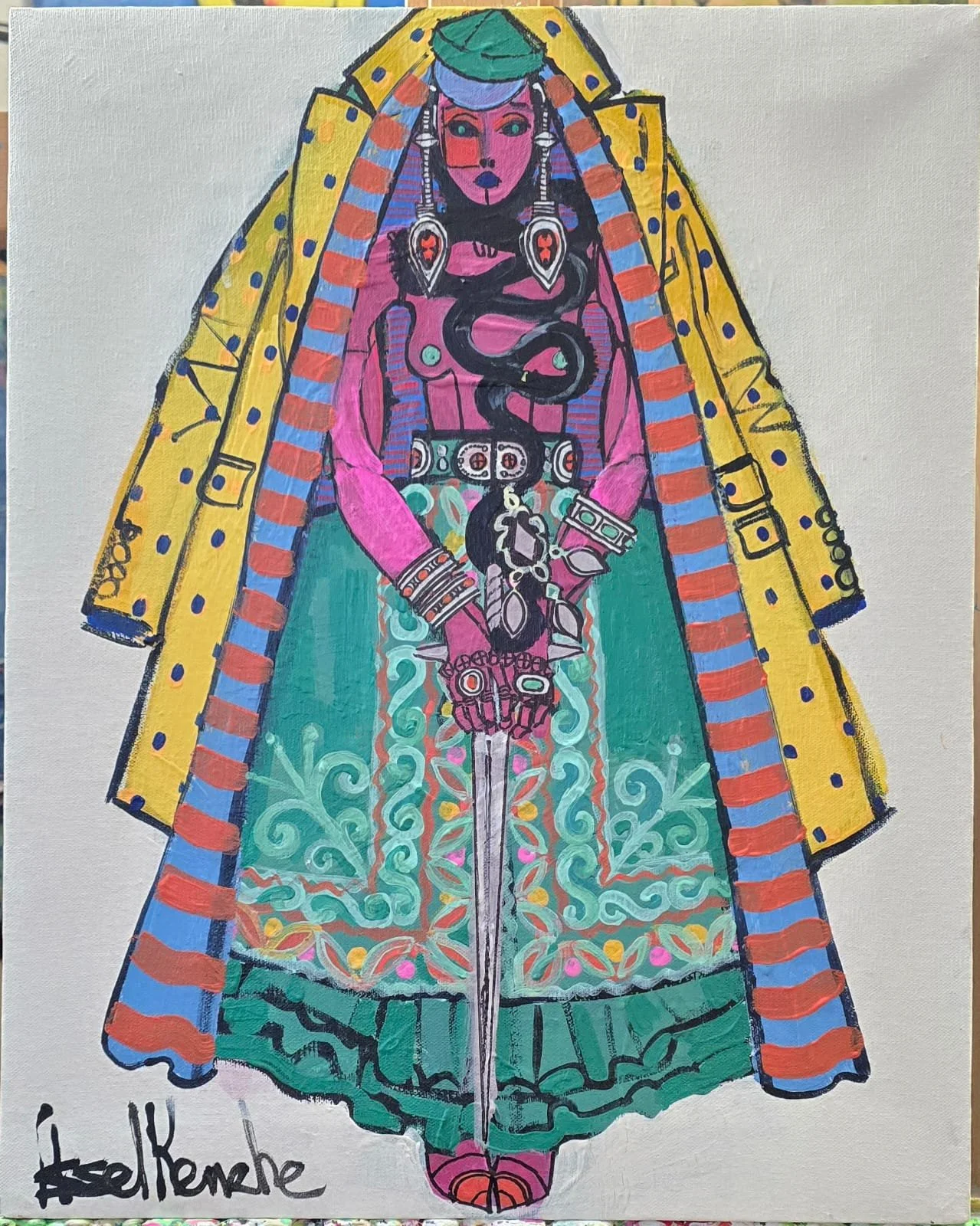
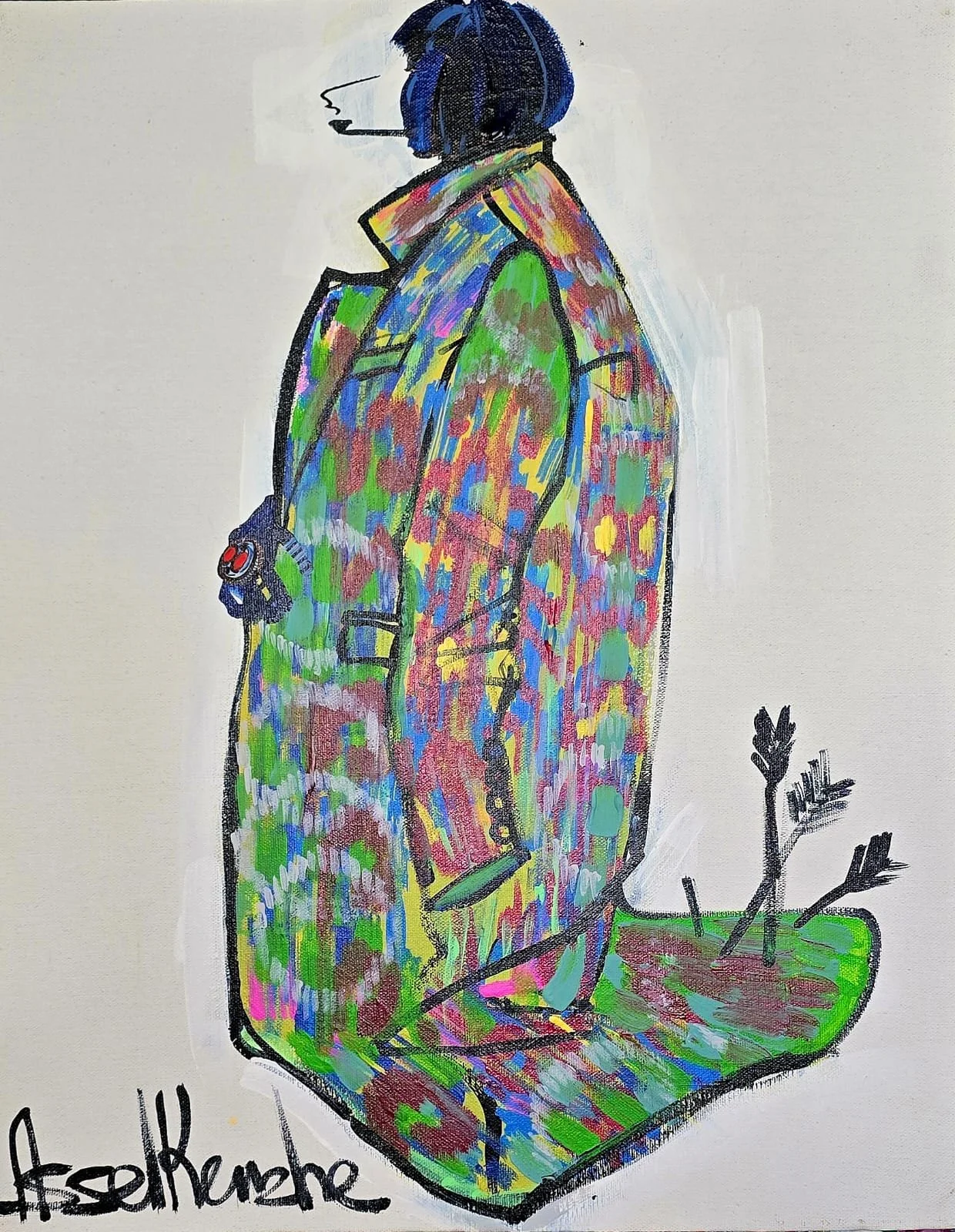
Assel Kenzhetayeva mixes it all: colourful costumes, hidden meanings, mythological references. On first seeing her paintings, one notices the jarring colours, often using the most simplified oppositions: red and green, blue and orange. Long, lean female shapes are reminiscent of fashion illustration.
It’s the arrows and the snakes that first suggest more is at play here. Each painting is a jigsaw puzzle of references and suggestions that we may or may not be able to read. Soft and flowy Central Asian fabrics are juxtaposed with hard and angular European knight’s armour; crosses, hearts and skulls pop up here and there.
It almost seems there’s too much going on, but it all boils down to one simple message. This series is dedicated to Medusa – the mythological figure whose story has been rewritten in recent years. Now a feminist icon, she is no longer a villain, not even a victim, but a warrior.
The central work of the series is Medusa herself, holding the head of Perseus – inspired by the controversial sculpture that became associated with the MeToo movement. It also borrows Basquiat’s crown to give this Medusa her well-deserved main-character status.
Kenzhetayeva plays with art historical references, juxtaposing them with contemporary culture. But her main topic remains the position of women – especially, but not exclusively, in Central Asian societies.
The costumes themselves shape-shift, borrowing European silhouettes: 18th century pannier skirts, modern jackets, corsets. They all squeeze the women in. Some quite literally turn into straitjackets, twisting around the women’s bodies, holding them hostage.
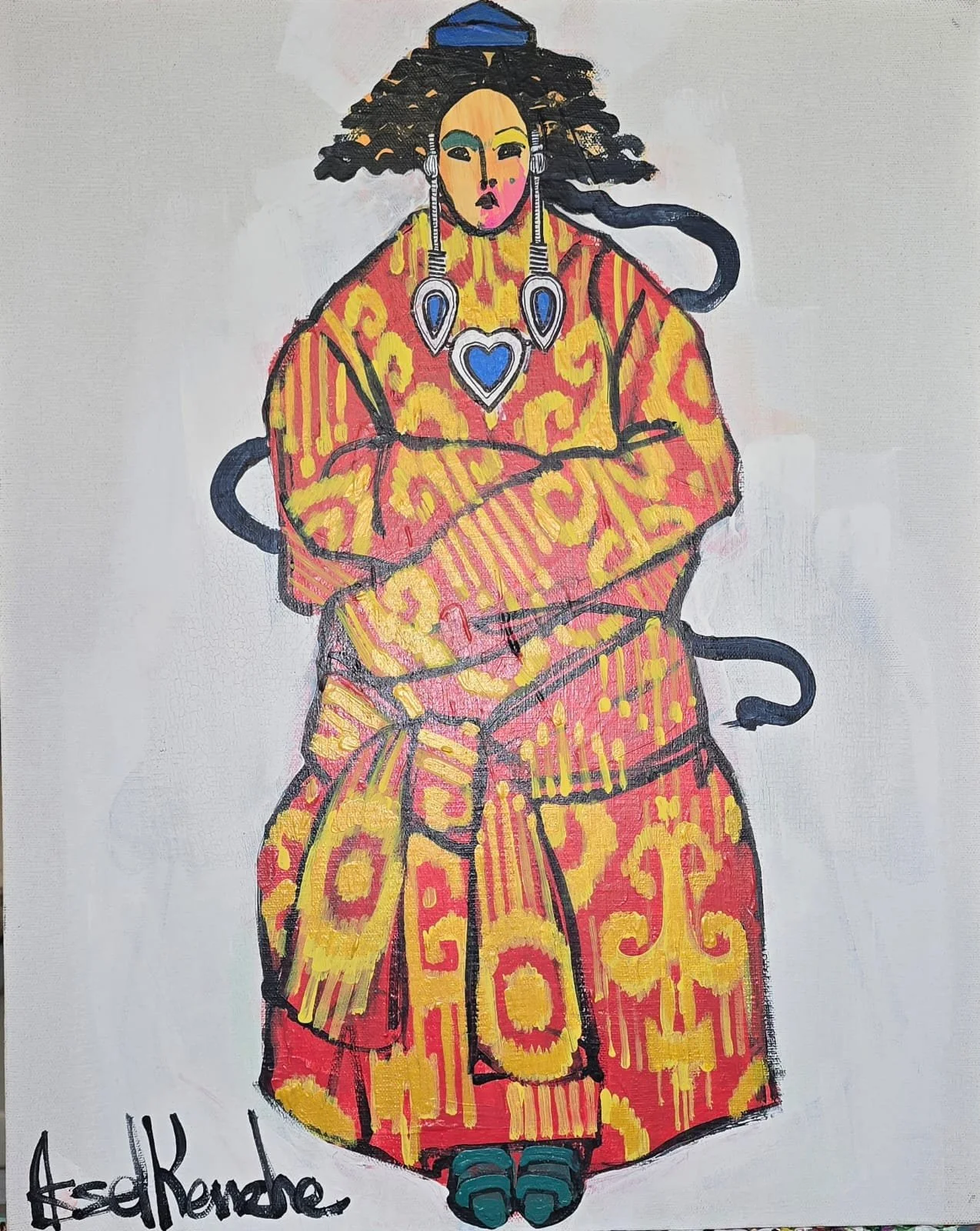
The artist is playing a well-rehearsed trick that started with her previous series ‘The Burning Bride’. She attracts the viewer with bright, exotic costumes and motifs on modern-looking fashion models, but then asks us to decode the messages behind each detail. The clothes and jewellery symbolise both the decorative and constrained nature of femininity. The overdressed models are often also semi-naked underneath the layers.
Viewers are invited to discover their own references. This is what often happens when Kenzhetayeva’s works are shown in public. Visitors say that they see themselves in the images. Each work has its own character, but all seem to invite interpretation.
This openness to understanding leads to differing opinions of the works. For the Burning Bride, Kenzhetayeva received criticism, mostly for juxtaposing naked bodies and traditional costumes. The complainants were local defenders of traditions. At the opposite end of the spectrum, her works are deemed too beautiful. I wonder: too beautiful for what? For feminism, for art? Are women allowed to make beautiful art, or has it become a sort of taboo?
Significant British artist Tracey Emin is famous for showing the raw and rough side of being a woman. She shares this fascination with other women artists, such as Frida Kahlo and Louise Bourgeois, who came before her. Yayoi Kusama and Hilma af Klint, on the other hand, were bright and cheerful to the max.
Closer to home, Kenzhetayeva’s compatriot Almagul Menlibayeva is a master of using visually striking images to tell difficult stories. Through her video and photography, she has addressed environmental disasters, nuclear testing, and human rights (to name a few).
Kenzhetayeva’s art does what art does best – it tells a story of its time and place. It uses a different language to address what everyone is thinking, but only some are saying. In making her paintings visually interesting, she opens a conversation. Then she leaves it to us to decide where we take it from there.
Assel Kenzhetayeva is an artist from Kazakhstan. She is both a painter and a fashion designer. Her exhibition ‘Queen Pleasure’ is taking place at Oner Corner gallery, Almaty in March 2026. @asselkenzhe_art